A winning business proposal does more than just describe your services. It shows that you understand the client's problem, that you have a clear and practical solution, and that you are a professional who can be trusted to deliver. It builds confidence before any work begins.
A poorly written proposal, on the other hand, undermines your credibility. It suggests that you do not pay attention to detail, that you do not understand the client's needs, or that you are not serious about the opportunity.
This guide walks through the key elements of a winning business proposal and how to write one effectively.
The Purpose of a Proposal
A proposal is not just a document. It is a sales tool. It is an opportunity to demonstrate your understanding, your competence, and your professionalism. It is often the deciding factor in whether you win a project.
The proposal should answer the client's key questions. Do you understand my problem? Do you have a solution that will work? Can you deliver it on time and within budget? Can I trust you to do what you say you will do?
Every element of the proposal should contribute to answering these questions.
The Structure of a Winning Proposal
A well-structured proposal is easy to read and understand. It guides the client through your thinking in a logical sequence.
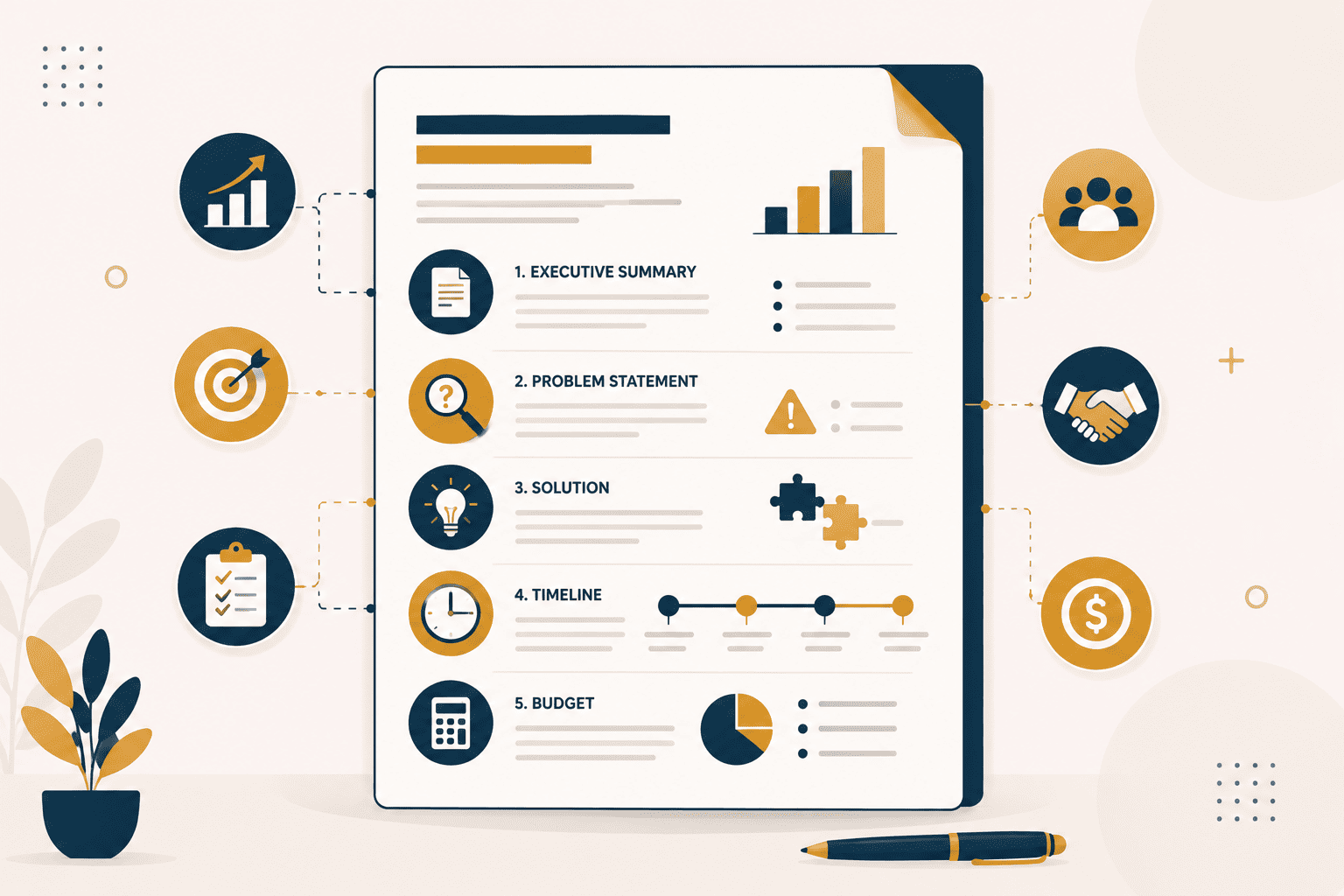
Executive Summary
The executive summary is a concise overview of the proposal. It should briefly describe the problem, your solution, and the key benefits. It should be clear and compelling. It should make the client want to read the rest of the document.
The executive summary is often the only part of the proposal that is read in full. It needs to capture the client's attention and make a strong case.
Problem Statement
The problem statement demonstrates that you understand the client's challenges. It shows that you have listened and that you see the situation clearly.
A good problem statement is specific. It is not generic. It reflects what the client has told you. It validates their experience.
The problem statement also positions your solution. It establishes the need that your solution addresses.
Solution
The solution section describes what you will do and why it will work. It should be specific and practical.
This section should explain your approach, the tools you will use, and the outcomes you expect. It should also differentiate your solution from alternatives.
The solution should be tailored to the client. Generic solutions suggest that you have not thought about their specific situation. Tailored solutions demonstrate attention and care.
Timeline and Budget
Be clear about what it will cost and when it will be delivered. Ambiguity erodes trust. Clients appreciate clarity.
The timeline should be realistic. It should include milestones that allow the client to track progress. It should be clear about what happens at each stage.
The budget should be transparent. It should show what the client is paying for. It should be consistent with the scope of work.
Terms and Conditions
The terms and conditions section covers the legal and practical aspects of the engagement. It includes payment terms, confidentiality, intellectual property, and other relevant considerations.
This section should be clear and fair. Complex terms or hidden conditions will damage trust.
Common Mistakes to Avoid
Being Too Generic
Generic proposals suggest that you have not thought about the client's specific situation. They are easy to spot and easy to dismiss.
Take the time to tailor each proposal. It shows that you care about the client and the project.
Overpromising
Promising outcomes you cannot deliver creates problems later. Be realistic about what is achievable. Clients respect honesty.
Ignoring the Client's Perspective
The proposal is about the client, not about you. Keep the focus on their needs and their outcomes.
Poor Presentation
Presentation matters. A proposal that is poorly formatted, has typos, or is difficult to read undermines your credibility.
The Process
Writing a good proposal is a process. It involves understanding the client, developing the solution, and communicating it effectively.
Start by listening. Understand the client's needs before you start writing. Then develop your solution thoughtfully. Then write clearly and concisely.
Review and revise before sending. A proposal that has been reviewed is more professional than one that has not.
Getting Help
If you are not confident in your proposal writing skills, getting help can be a good investment. A well-written proposal can win you projects that you would otherwise lose.
Every business is different. What works for one may not work for another. If you would like to discuss whether proposal writing support could help your specific situation, we are always available for a conversation.

Leave a Comment