
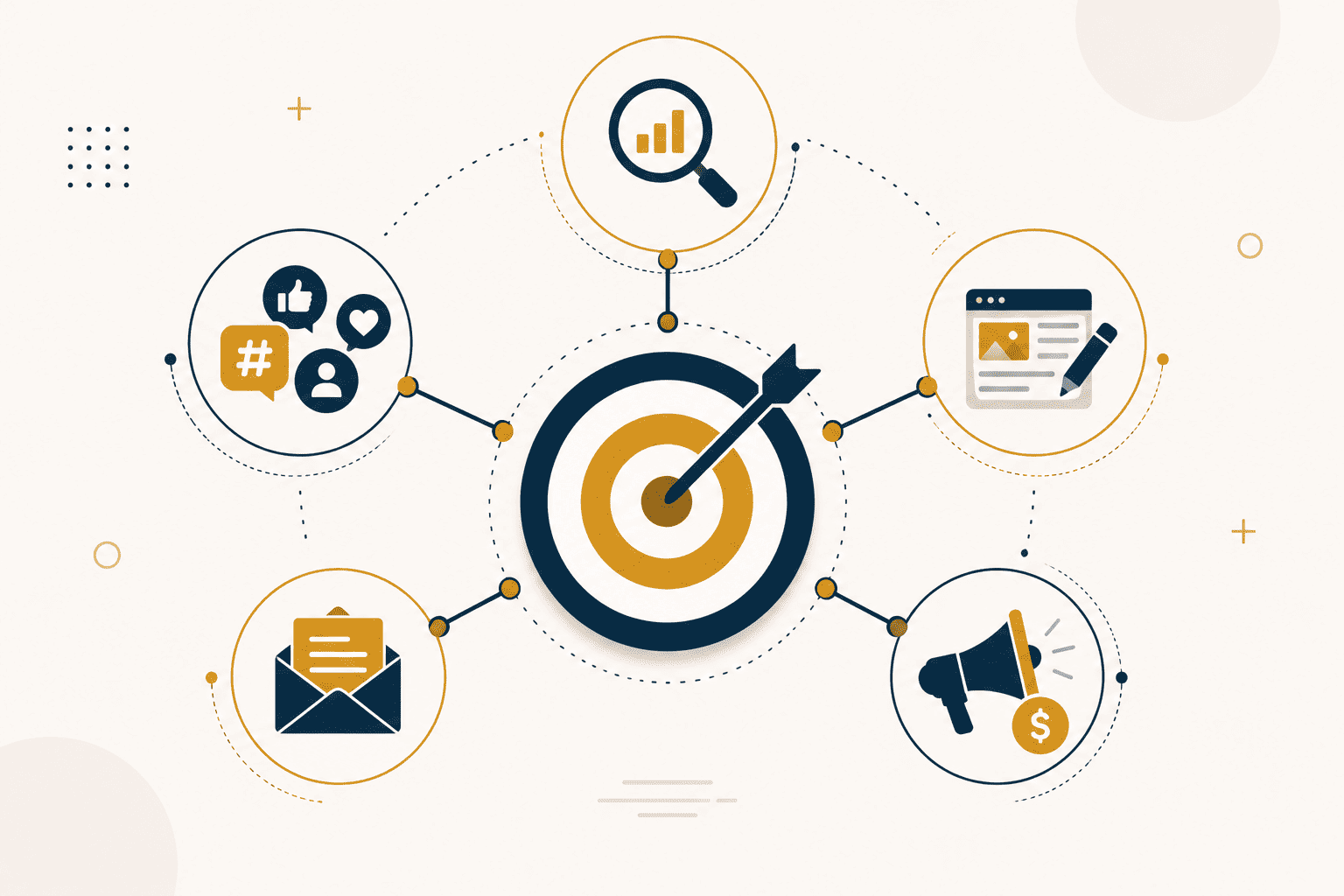
Having a great website is only half the battle. If nobody can find it, it does not matter how well-designed or well-written it is. A website that is not visible is simply a beautiful ghost. It exists, but it does not work for your business.
Digital marketing is how you bridge the gap between having a website and having a website that generates leads. It is how you attract the right visitors, engage them with relevant content, and convert them into clients.
This is true whether your audience is local or international, whether you serve businesses or individuals. The strategies may differ in execution, but the underlying principles remain the same.
This guide walks through the most effective digital marketing channels and how to use them.
The Foundation: Strategy Before Tactics
Before diving into specific channels, it is worth stepping back to consider the broader strategy. Digital marketing without a strategy is just activity. You are doing things, but you are not necessarily achieving anything.
A coherent strategy starts with clarity about your audience. Who are you trying to reach? What problems do they have? Where do they look for solutions? Understanding your audience is the foundation of effective marketing.
Clarity about your offer is equally important. What do you provide that your competitors do not? What value do you deliver that justifies attention and investment? A clear offer is easier to communicate and easier for potential clients to understand.
With clarity about audience and offer, you can choose the channels that make sense. Different channels work for different businesses. The right choice depends on who you are trying to reach and what you are trying to achieve.
Channel 1: Search Engine Optimization
Search engine optimisation is the practice of making your website visible to search engines. It is about ensuring that when someone searches for the services you offer, your website appears prominently.
The fundamentals of SEO are straightforward. Use relevant keywords in your content. Structure your site logically. Ensure your site loads quickly. Build quality links from other reputable sites. Beyond the fundamentals, there is ongoing work to maintain and improve your visibility.
For a service business, SEO is particularly important. Potential clients often find service providers through search. Being visible in those searches is a direct source of leads.
The cost of SEO is time and attention rather than money. It does not require a significant budget. It does require consistency and expertise.
Channel 2: Social Media Marketing
Different social media platforms serve different purposes. Choosing the right ones for your business depends on your audience and your goals.
LinkedIn is the platform of choice for B2B and professional services. It is where decision-makers engage with content and discover service providers. A consistent presence on LinkedIn, with thoughtful content and genuine engagement, builds credibility and visibility.
Instagram and TikTok work well for consumer brands and businesses with strong visual content. They are less suited to professional services but can be effective depending on your audience.
The key to effective social media marketing is not volume but consistency and value. Posting regularly is important. Posting content that your audience finds valuable is more important.
Channel 3: Content Marketing
Content marketing is the practice of creating and sharing content that attracts and engages your target audience. This includes blog posts, articles, videos, guides, and other resources.
The value of content marketing is that it attracts visitors who are already looking for solutions. When someone searches for information about a problem they are facing, your content can be the answer. When they find your content useful, they begin to trust you. When they trust you, they are more likely to consider working with you.
Content marketing also builds authority. Regularly publishing thoughtful, useful content demonstrates that you understand your field. It positions you as an expert.
The same content can be repurposed across multiple channels. A blog post can become a LinkedIn article, a social media post, and an email newsletter. This makes content marketing efficient as well as effective.
Channel 4: Email Marketing
Email marketing remains one of the most effective digital marketing channels. It is direct, personal, and allows you to reach people who have already expressed interest in your business.
The key to effective email marketing is consent and relevance. You should only email people who have asked to hear from you. You should only send content that is relevant to their interests.
Email marketing can be used to nurture leads, share valuable content, announce new services, and stay top of mind with past clients. The businesses that use email well build stronger relationships with their audience.
Channel 5: Paid Advertising
Paid advertising includes search ads, social media ads, and display ads. It can be an effective way to reach new audiences quickly.
The advantage of paid advertising is speed. SEO and content marketing take time. Paid advertising can start generating traffic within hours. The disadvantage is cost. Paid advertising requires ongoing investment.
For most service businesses, paid advertising works best when combined with organic channels. It is most effective for targeting specific audiences or promoting specific offers.
Measuring What Matters
Effective digital marketing is built on measurement. If you are not measuring what is working, you cannot improve it.
The most important metrics are conversions, not just traffic. Traffic is only valuable if it leads to action. A website that gets a thousand visitors and no leads is less valuable than a website that gets a hundred visitors and five leads.
Tracking conversions requires setting up analytics to capture what happens after someone visits your site. This allows you to understand which channels are delivering results and where to focus your efforts.
Building a Digital Presence
Digital marketing is a discipline, not a one-time effort. It requires consistent attention. The businesses that succeed with digital marketing are often those that treat it as an ongoing activity rather than a project to be completed.
The cost of digital marketing in time and money is high, but the cost of not being visible is greater. A business that cannot be found online is a business that is losing opportunities.
Every business is different. What works for one may not work for another. If you would like to discuss whether a digital marketing strategy could work for your specific situation, we are always available for a conversation.

Leave a Comment