
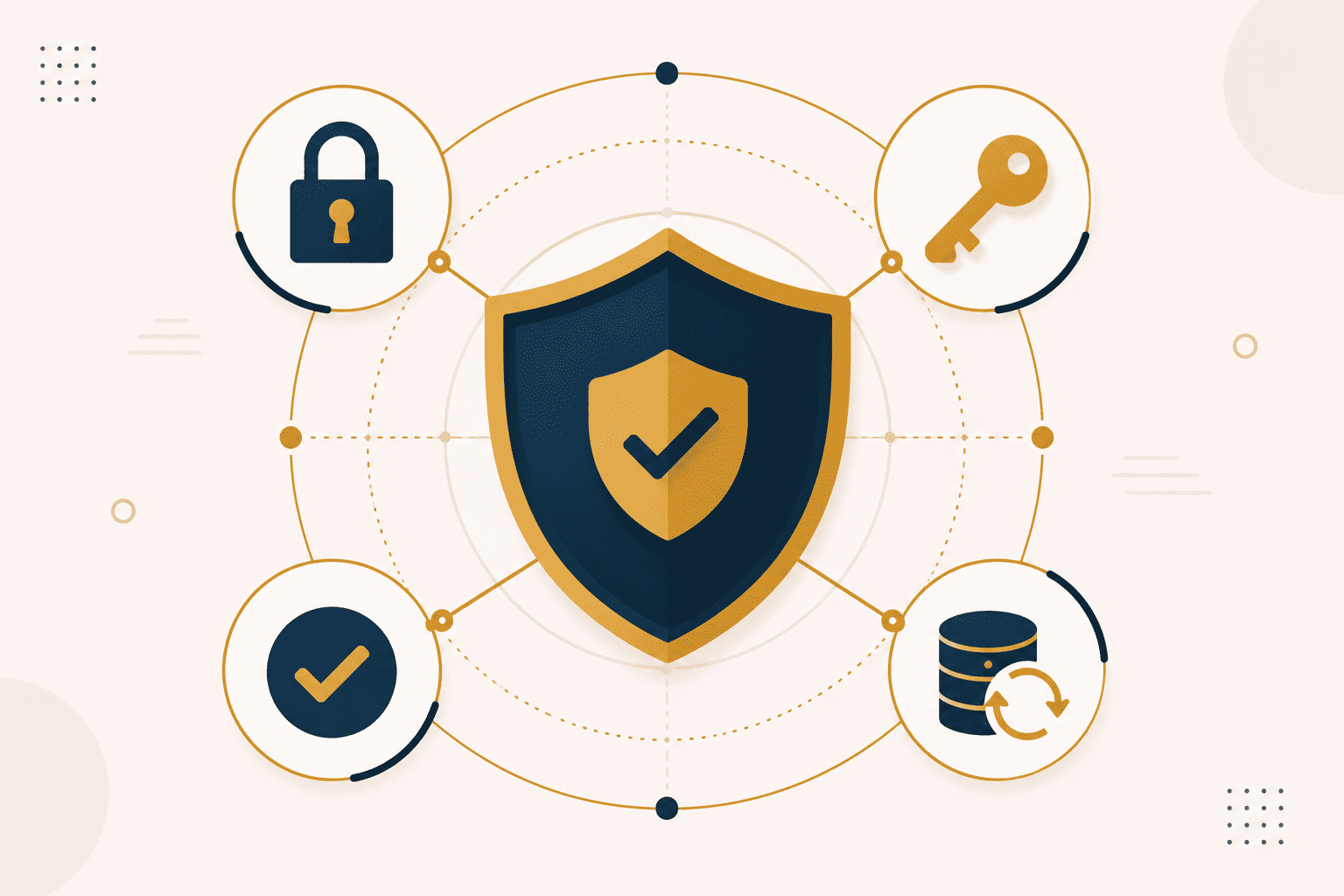
As businesses become more digital, they also become more vulnerable to cyber threats. Cybercrime is a real risk that can damage your reputation, lose you clients, and cost you money. The increasing reliance on digital tools, cloud services, and remote work has expanded the attack surface that cybercriminals can target.
The threat is not limited to large organisations. Small and medium-sized businesses are often the most attractive targets because they have valuable data but less sophisticated security. The assumption that "it won't happen to me" is a dangerous one.
This guide covers essential cybersecurity practices that every business should implement.
Understanding the Threat Landscape
Cyber threats take many forms. They can involve malware that infects your systems. They can involve phishing emails that trick your team into revealing sensitive information. They can involve ransomware that locks your files until you pay.
The threats are constantly evolving. Cybercriminals are sophisticated and persistent. They adapt their methods to exploit new vulnerabilities.
The cost of a cyber attack can be high. Direct costs include the loss of data, the cost of recovery, and potential ransom payments. Indirect costs include reputational damage, loss of client trust, and regulatory penalties.
Essential Cybersecurity Practices
Use Strong Passwords
Using unique, complex passwords for every account is the foundation of cybersecurity. Weak passwords are easy to guess or crack. Reusing passwords across accounts means that a breach of one account exposes multiple accounts.
Strong passwords are long, complex, and unique. They should include a mix of letters, numbers, and symbols. They should not be based on personal information that is easy to guess.
Consider using a password manager to generate and store strong passwords. This makes it easier to maintain unique passwords for every account.
Enable Two-Factor Authentication
Two-factor authentication adds an extra layer of security. It requires something you know (your password) and something you have (a code sent to your phone or generated by an app).
Two-factor authentication significantly reduces the risk of account compromise. Even if a password is stolen, the attacker cannot access the account without the second factor.
Enable two-factor authentication on every account that offers it.
Back Up Your Data
Regular backups are essential for recovery. If your data is lost or encrypted by ransomware, backups are the only reliable way to restore it.
Backups should be stored securely and tested regularly. A backup that cannot be restored is not a backup.
A good backup strategy includes multiple copies stored in different locations. At least one copy should be offline or offsite.
Train Your Team
Human error is often the weakest link in cybersecurity. Phishing attacks, in particular, rely on tricking people into taking actions they should not take.
Regular training helps your team recognise threats and respond appropriately. Training should be practical, relevant, and ongoing.
Simulated phishing tests can help identify vulnerabilities and reinforce training.
Additional Best Practices
Keep Software Updated
Software updates often include security patches. Failing to update software leaves known vulnerabilities unpatched.
Enable automatic updates where possible. For software that cannot be updated automatically, establish a regular schedule for manual updates.
Use Firewalls and Antivirus Software
Firewalls and antivirus software provide essential protection against known threats. They should be installed on all devices and kept up to date.
Limit Access
Not everyone in your organisation needs access to all data. Limit access to sensitive information to those who need it.
Implement the principle of least privilege: give people only the access they need to do their work.
Develop an Incident Response Plan
An incident response plan outlines what to do in the event of a security breach. It defines roles, responsibilities, and procedures for responding to and recovering from an attack.
Having a plan in place reduces the chaos and confusion that often follows a breach.
The Cost of Cybersecurity
Cybersecurity is an investment, not a cost. The cost of prevention is small compared to the cost of recovery.
The businesses that invest in cybersecurity are the ones that are better positioned to survive and thrive in a digital environment.
Building a Security Culture
Cybersecurity is not just about technology. It is also about culture. A security culture is one where everyone understands the importance of security and takes responsibility for it.
Building a security culture requires leadership commitment, regular communication, and ongoing training.
A Practical Starting Point
Improving cybersecurity does not require a large budget or a major project. Start with the fundamentals: strong passwords, two-factor authentication, regular backups, and team training.
Each step you take reduces your risk. The businesses that take cybersecurity seriously are the ones that are best protected.
Every business is different. What works for one may not work for another. If you would like to discuss whether cybersecurity strategies could work for your specific situation, we are always available for a conversation.

Leave a Comment