
Your brand is not just your logo. It is not just your website. It is not just your social media presence. Your brand is the entire experience a customer has with your business. It is what they see, what they hear, what they feel, and what they remember. It is the sum of every interaction they have with you, from the first time they hear your name to the moment they become a loyal client.
In any market, trust is a major currency. In markets where relationships matter as much as transactions, trust becomes even more critical. A professional brand signals that you are serious about your business, that you pay attention to detail, and that you can be trusted to deliver on your promises.
This guide explores why branding matters, what a strong brand consists of, and how graphic design contributes to building a professional identity.
Why Branding Matters
A professional brand does several things that directly affect your business success.
It Helps You Stand Out
In a crowded market, having a professional brand helps you differentiate yourself from competitors. When potential clients are choosing between multiple options, the one that looks professional, credible, and established often wins.
This is not about being flashy or spending money on expensive design. It is about being clear, consistent, and professional in how you present yourself. The businesses that stand out are often the ones that pay attention to the details others overlook.
It Builds Credibility
A professional brand signals that you take your business seriously. It tells potential clients that you are invested in your success and that you will invest in theirs. It creates an impression of competence and reliability.
Credibility is built through consistency. When your visual identity is consistent across your website, social media, printed materials, and communications, it reinforces a single, coherent message. Inconsistency creates confusion and erodes trust.
It Creates Recognition
When people see your brand consistently, they begin to recognise it. Recognition builds familiarity. Familiarity builds trust. Over time, your brand becomes shorthand for the quality and reliability you deliver.
Components of a Strong Brand
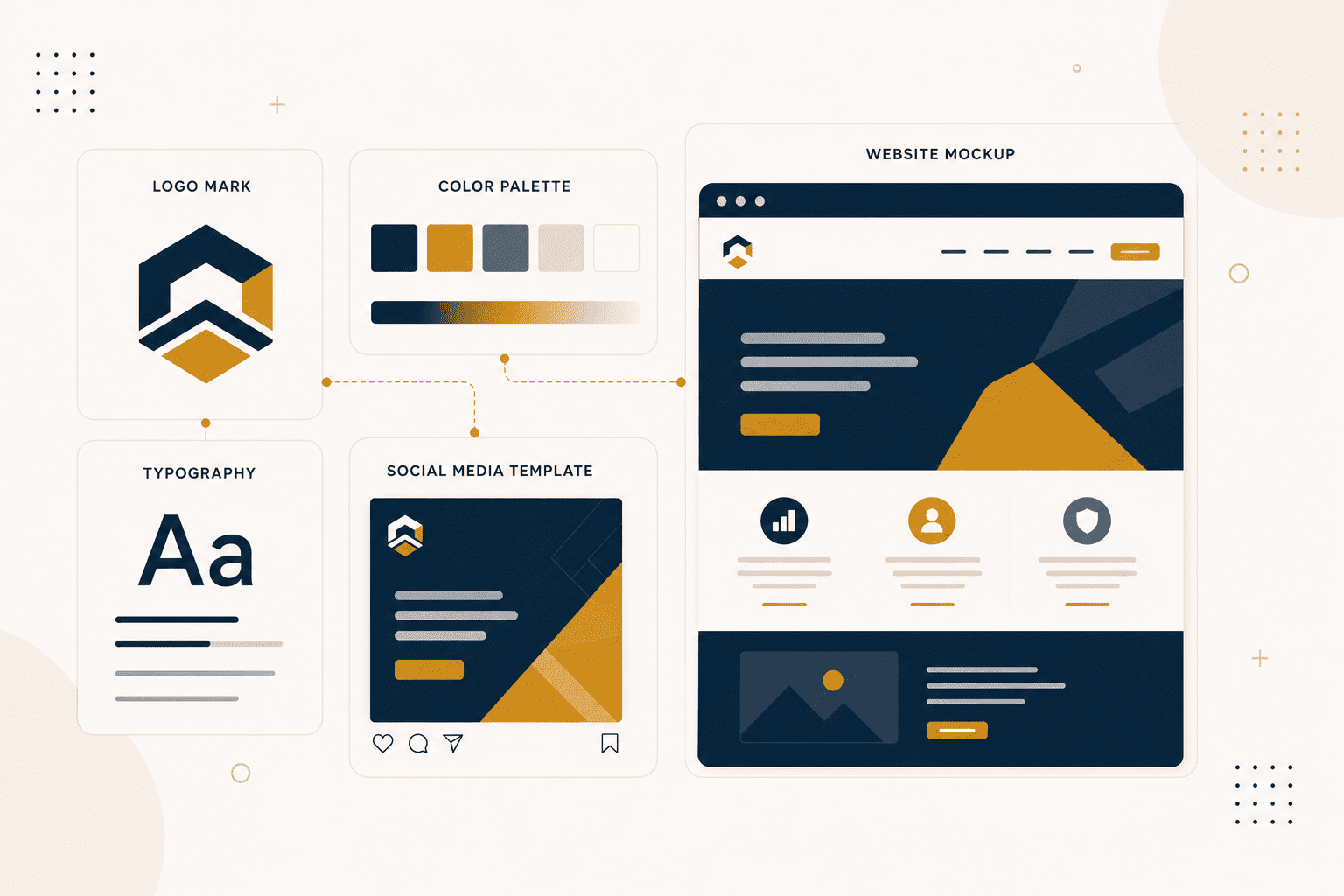
A strong brand is built on several interconnected elements. Each component contributes to the overall impression people form of your business.
Logo
Your logo is often the first visual element people associate with your business. It should be distinctive, memorable, and appropriate for your industry. A well-designed logo works at different sizes, in different contexts, and across different media.
A logo is not your brand, but it is an important symbol of your brand. It is the visual anchor that people remember.
Color Palette
Color is one of the most powerful tools in branding. Different colors evoke different emotions and associations. A consistent color palette creates a cohesive visual identity that is immediately recognisable.
The colors you choose should reflect your brand personality. A professional services firm might choose conservative, trustworthy colors. A creative agency might choose bolder, more expressive colors. The key is intentionality. Your color choices should be deliberate, not accidental.
Typography
The fonts you use communicate as much as the words you write. Professional, readable typography signals attention to detail. Inconsistent or inappropriate typography signals the opposite.
Your typography choices should be consistent across all your communications. This includes your website, your social media graphics, your printed materials, and your email signatures.
Imagery
The images you use, whether photographs or illustrations, contribute to the impression people form of your brand. Professional, relevant imagery reinforces your credibility. Generic or low-quality imagery undermines it.
Consistency is important here as well. The style of images you use should be consistent with your overall brand identity.
Social Media Templates
Your social media presence is often the most visible aspect of your brand. Consistent templates for your social media posts create a professional, cohesive appearance.
The templates should incorporate your logo, your color palette, and your typography. They should be designed to be easily adaptable for different types of content.
Website Design
Your website is often the first interaction potential clients have with your business. It should reflect your brand identity consistently. The colors, fonts, imagery, and overall design should all work together to communicate a single, coherent message.
A professional website is not just about aesthetics. It is also about usability, clarity, and functionality. The design should support the user experience.
The Role of Graphic Design
Graphic design is the discipline of creating visual communication. In the context of branding, graphic design translates your brand identity into tangible assets.
Graphic design brings your brand to life. It creates the logo, selects the colors, chooses the typography, and designs the social media templates. It ensures consistency across all your visual communications.
The value of good graphic design is not just aesthetic. It is functional. Well-designed materials communicate more effectively. They are easier to understand. They create a better impression.
Professional graphic design is an investment in your brand. The cost of good design is small compared to the cost of a weak brand that fails to build trust or recognition.
Getting Started
Building a professional brand does not require a massive budget or a major agency. It requires clarity about who you are, consistency in how you present yourself, and attention to the details that matter.
Start with the basics. Define your brand personality. Choose your colors and typography intentionally. Ensure your logo works in different contexts. Create templates for your social media presence. Review your website design to ensure it reflects your brand identity.
The businesses that invest in their brand tend to attract better clients, command higher prices, and build more sustainable businesses.
Every business is different. What works for one may not work for another. If you would like to discuss how graphic design and branding could support your specific situation, we are always available for a conversation.

Leave a Comment