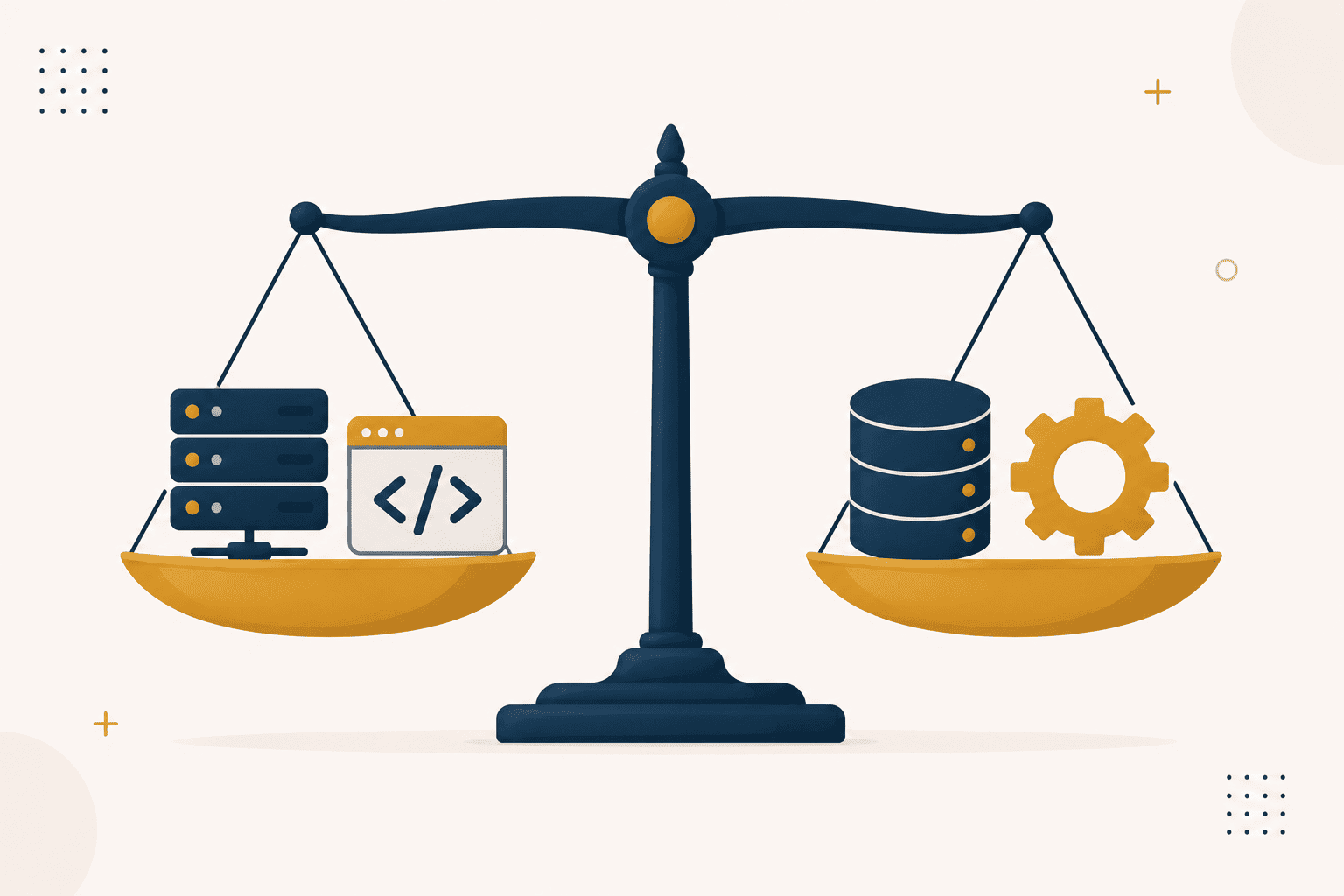
Choosing the right technology stack is one of the most important decisions you will make when building software. It affects not only the development timeline but also long-term maintenance costs, flexibility, and your ability to adapt as your business grows.
A technology stack is the combination of programming languages, frameworks, libraries, and tools used to build and run a software application. The choices you make at the beginning of a project will have lasting consequences. Choosing well sets you up for success. Choosing poorly creates technical debt that slows you down and costs you money.
This guide walks through the key considerations in choosing a tech stack and how to make decisions that serve your business over the long term.
Why the Tech Stack Matters
The technology stack you choose influences every aspect of your software project.
Development Timeline
Some technologies enable faster development. They have more mature tooling, larger communities, and better documentation. They allow you to build more quickly.
Other technologies are more complex. They require more time to learn and more effort to build with. The choice affects how long it takes to get your product to market.
Maintenance Costs
Software is never finished. It needs to be maintained, updated, and adapted as requirements change. The technology stack you choose affects how easy and expensive this ongoing work will be.
Some technologies are easier to maintain than others. They have better documentation, larger communities, and more stable ecosystems. Others are more prone to breaking changes and require more effort to keep running.
Scalability
As your business grows, your software needs to grow with it. Some technologies scale more easily than others. The wrong choice can limit your ability to handle increased load or add new features.
Developer Availability
To maintain and evolve your software, you need developers who can work with your chosen technology. Some technologies have large, active communities of developers. Others are less common and harder to find talent for.
Key Considerations
Maintainability
Maintainability is about how easy it is to understand, modify, and extend the software over time. A maintainable codebase is well-organised, well-documented, and follows consistent patterns.
The choice of technology affects maintainability. Some technologies encourage good practices. Others make it easier to create messy, hard-to-maintain code.
Scalability
Scalability is about whether the technology can handle increased load and growing complexity. Some technologies are designed for scale. Others are designed for simplicity and flexibility.
The right choice depends on your expected growth. A technology that is perfect for a small project may struggle at larger scales. The reverse is also true.
Developer Availability
If you need to hire developers to maintain or extend your software, you need to be able to find them. Some technologies have large talent pools. Others are niche.
Developer availability is not just about finding people. It is also about finding people who are skilled enough to do the work well. A technology with a large but shallow talent pool may be harder to hire for than one with a smaller but deeper pool.
Cost
The cost of a technology stack is not just about licensing fees. It is also about development time, maintenance effort, and the cost of hiring developers.
Some technologies are free to use but expensive to develop with. Others have upfront costs but are more efficient to work with. The total cost of ownership is what matters.
Ecosystem and Community
A technology with a strong ecosystem has more tools, libraries, and resources available. It is easier to find solutions to common problems. It is easier to integrate with other systems.
A strong community means more documentation, more tutorials, and more people who can help when you get stuck. It also means the technology is more likely to be maintained over time.
Common Tech Stack Choices
The specific technologies you choose depend on your needs, but there are common patterns that work for many businesses.
For Web Applications
For web applications, a common approach is to use a backend framework like Laravel (PHP), Django (Python), or Node.js (JavaScript) with a frontend framework like React or Vue.js.
The choice between these options often comes down to the team's existing skills and the specific requirements of the project.
For Mobile Applications
For mobile applications, you can build native apps for each platform or use cross-platform frameworks like React Native or Flutter.
The choice affects development time, performance, and the user experience.
For Automation and Integration
For automation and integration projects, tools like n8n, Make.com, and Zapier are accessible options that do not require custom development.
The Decision Process
Choosing a tech stack is a decision that should be made deliberately.
Understand Your Requirements
Start by understanding what you need. What is the purpose of the software? What are the key requirements? What constraints do you have?
Consider Your Team
What skills does your team have? What technologies are they comfortable with? What are they interested in learning?
Consider Your Future
Where do you expect to be in three to five years? Will the technology you choose serve you at that scale?
Make a Decision
Based on your understanding of requirements, your team, and your future, make a decision. Then commit to it. Changing technology stacks mid-project is expensive and disruptive.
Getting Expert Guidance
Choosing a tech stack is a significant decision. Getting expert guidance can help you avoid costly mistakes and make choices that serve you well over the long term.
A consultant with experience across different technologies can help you understand the trade-offs and make a decision that fits your specific needs.
Every business is different. What works for one may not work for another. If you would like to discuss whether we can help you choose the right tech stack for your specific situation, we are always available for a conversation.

Leave a Comment